Olivia Velte
email ·
github ·
linkedin
Hello! This is my site for AI safety things, I'm currently a SPAR mentee working on Model Forensics, mentored by Aditya Singh.
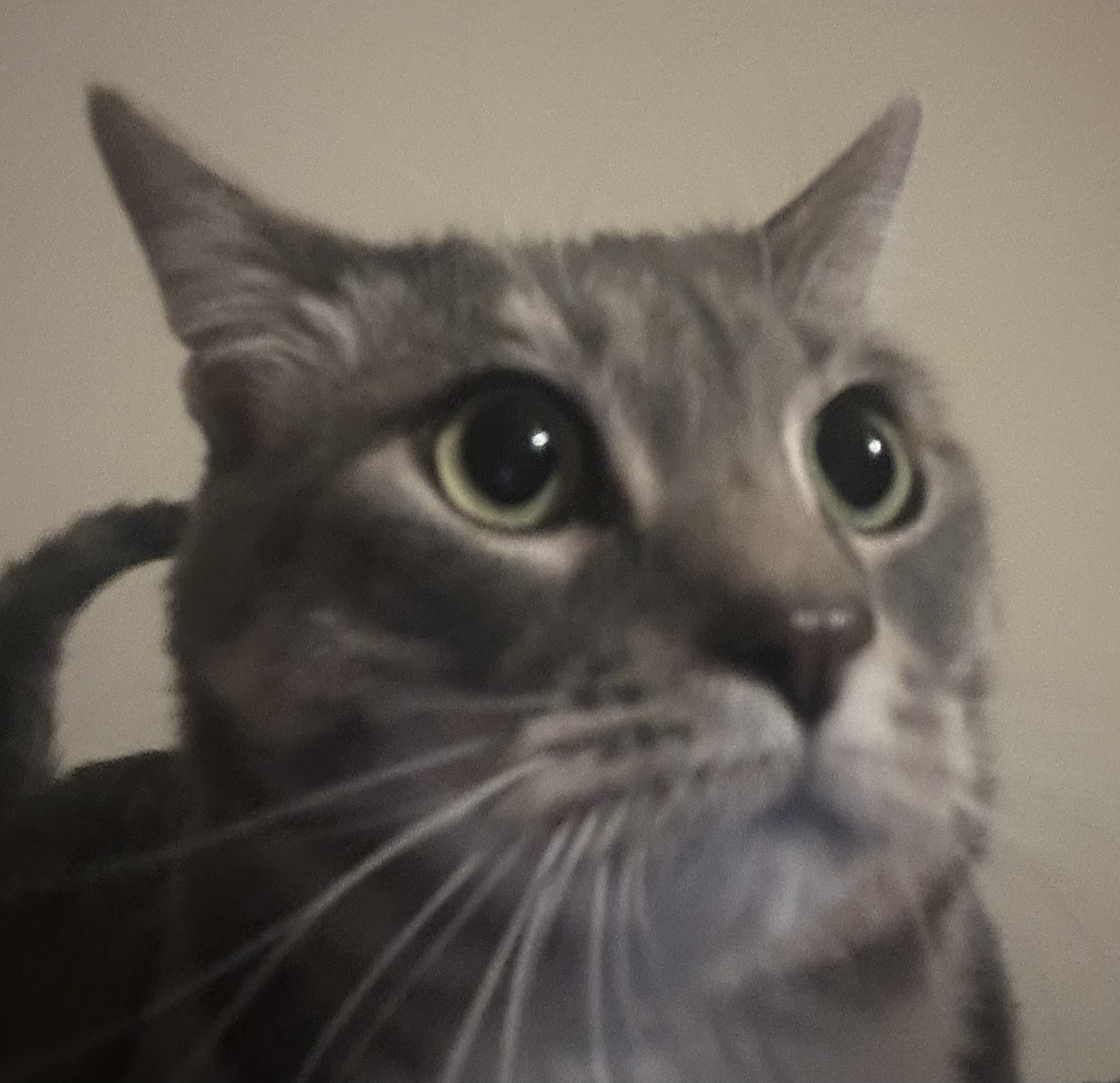
In my free time I enjoy reading, writing, and petting my cat Ollie -->
Experience
- M.Sc. AI for the Biosciences, Distinction, Queen Mary University of London (2025)
- B.A. Neuroscience, Boston University (2024)
- Worked in Neuroscience research for 3 years @ Boston University School of Medicine (specialized in prefrontal cortex reward circuitry and the cognition of decision-making)
Research
*Some independent neuro-inspired projects, just a fun way to be creative as I learned safety research techniques.
- CoT Faithfulness Degrades Where Human Deliberation Would Too: Tested whether CoT degrades the same way under incentive pressure as prefrontal deliberation (most vulnerable to motivated inference under ambiguity). Found selective degradation on defeasible problems, with the largest drops in risk assessment and probabilistic forecasting.
- Sycophancy as a Variable Reward Signal: Designed a Response Variability Index (RVI) Shannon-entropy measure of how predictably frontier models agree with users across semantically equivalent prompt clusters. Found 30.4% of Mistral's clusters fall in the variable-ratio regime versus 14.3% for Claude.
- Neural population stress-test of ARC's presumption of independence: Grounded their finding in 25 years of cortical data, independence failures scale with circuit size and peak at decision boundaries.
- Predicting AI Dependency: Tested whether the goal-directed→habitual transition (striatal dopamine shifting control from deliberate, outcome-sensitive engagement to cue-driven responding) leaves a linguistic fingerprint detectable before dependency behavior consolidates.
Non AI safety Research:
- MSc Thesis: An NLP-Based Framework for Hypothesis Generation and Validation of Neural Circuit–Cancer Relationships. Olivia Velte, Dr. Mohamed Elbadawi
- Alpha-2 adrenergic agonists reduce heavy alcohol drinking and improve cognitive performance in mice. Quadir, S.G., Lepeak, L., Miracle, S., Collu, R., Velte, O., He, Y., Ozturk, Z., Rohl, C. D., Sabino, V., & Cottone, P. (2026). eNeuro, https://doi.org/10.1523/ENEURO.0368-25.2026
- The Alpha2 Adrenergic Agonist Guanfacine Attenuates Chronic Alcohol-Induced Temporal Order Memory Deficits in Mice. O. Velte, P. Cottone, V. Sabino, [poster] for UROP (2023)
Drop a book recommendation :)